
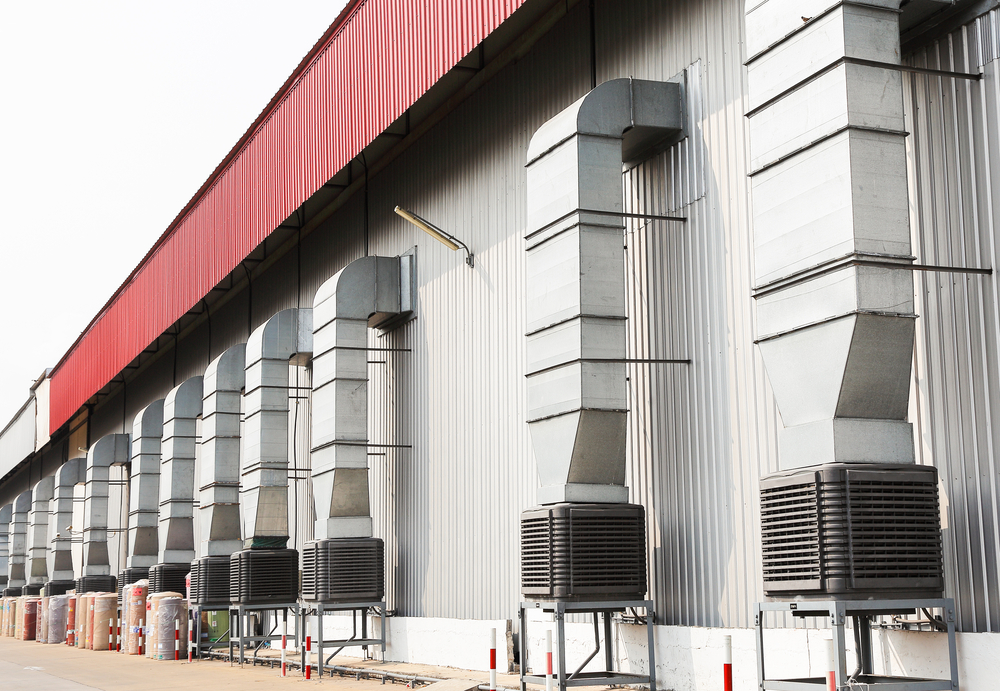
Why Use Evaporative Cooling in Warehouse Environments?
November 11, 2025 6:27 pmManaging temperature and air quality in large warehouse facilities presents unique challenges, particularly in hot and dry climates where traditional air conditioning systems can be both costly and inefficient. Evaporative cooling in warehouses offers an effective, sustainable, and energy-efficient alternative that not only maintains worker comfort but also improves air quality and reduces overall operational costs. By leveraging natural processes of water evaporation, this cooling method delivers large volumes of cooled, fresh air into industrial spaces, creating a safer and more productive work environment.
Benefits of Evaporative Cooling in Warehouses
Evaporative cooling systems operate by drawing warm, dry air through wetted cooling media. As air passes through this medium, water evaporates, reducing the air temperature while increasing its humidity slightly. The cooled air is then distributed throughout the facility. This simple yet powerful process provides several distinct benefits for warehouse applications.
Temperature Control and Airflow Management
One of the key advantages of evaporative cooling in warehouses is its ability to regulate temperature across large open spaces without the high energy demands of traditional mechanical refrigeration systems. Unlike conventional air conditioning that recirculates the same air, evaporative coolers continuously introduce fresh, filtered air, displacing warm and stale air through exhaust vents or open doors. This constant airflow cycle not only lowers internal temperatures by as much as 20 to 30 degrees Fahrenheit but also prevents the buildup of airborne particulates, fumes, and contaminants. The result is an indoor environment that supports both product integrity and worker health.
In facilities where forklifts, packaging equipment, and manufacturing machinery generate substantial heat, maintaining proper airflow is critical. Evaporative systems can be engineered to provide targeted cooling zones, ensuring that airflow reaches high-activity or high-temperature areas. Through strategic placement of units, ducting, and ventilation openings, temperature gradients can be minimized and thermal comfort optimized. This level of control makes evaporative cooling particularly valuable in facilities storing heat-sensitive goods or housing delicate electronic equipment.
In addition to temperature regulation, the increased air exchange rate in evaporative-cooled warehouses enhances oxygen levels and dilutes airborne pollutants. This improvement in indoor air quality contributes to reduced fatigue and respiratory discomfort among employees. Workers in such environments experience fewer heat-related issues, resulting in better concentration, higher productivity, and reduced absenteeism.
Improved Air Quality and Environmental Impact
Another significant advantage of evaporative cooling systems is their positive environmental profile. Because they use water as a cooling medium rather than chemical refrigerants, they eliminate the risk of refrigerant leakage and reduce greenhouse gas emissions. Additionally, these systems consume significantly less energy than vapor-compression systems, lowering the carbon footprint of warehouse operations.
Evaporative coolers also act as natural air filters. The wetted media traps dust, pollen, and airborne particles, which can otherwise accumulate in industrial environments. This filtration effect leads to cleaner air and less buildup on machinery and stored inventory, contributing to reduced maintenance costs and improved equipment longevity.
How to Design Warehouse Evaporative Cooling Systems
Proper design and implementation are essential for achieving optimal performance from evaporative cooling systems in warehouse environments. Each facility presents unique spatial configurations, airflow dynamics, and operational requirements that must be addressed during system planning.
Choosing the Right Cooling Units for Your Facility
Selecting the appropriate type and size of evaporative cooling units is critical to ensuring uniform temperature control and energy efficiency. Industrial-grade coolers, such as those manufactured by Premier Industries, Inc., feature durable stainless steel housings and rigid-type cooling media capable of achieving up to 90 percent cooling efficiency. When designing a system, engineers must calculate the total airflow requirement based on the building’s volume, internal heat load, and occupancy patterns.
Centralized ducted systems are ideal for large warehouses where even air distribution is a priority, while direct evaporative coolers may be better suited for spot cooling or areas with concentrated heat sources. Factors such as local climate, humidity levels, and available water supply also influence equipment selection. For example, direct evaporative systems perform exceptionally well in arid climates, such as Phoenix, AZ, where low ambient humidity maximizes cooling potential.
Incorporating automated controls and variable-speed fans can further enhance system efficiency. These features allow operators to adjust airflow and water usage dynamically in response to real-time temperature and humidity readings. In addition, integrating sensors and building management systems provides greater operational oversight, enabling predictive maintenance and ensuring consistent performance.
System Layout and Air Distribution Design
Effective evaporative cooling design depends on the proper placement of air inlets, outlets, and exhaust paths. The goal is to promote even air distribution while preventing stagnant zones or short-circuiting of airflow. For optimal results, cool air should enter at a high point and move across the workspace in a continuous flow before exiting through exhaust vents or doors. Computational fluid dynamics (CFD) modeling is often employed during the design phase to visualize airflow patterns and identify potential areas of uneven cooling.
In high-bay warehouse facilities, the use of large ceiling fans can help circulate air and equalize temperature differentials between upper and lower levels. Similarly, ductwork can be tailored to channel cooled air directly toward specific production areas, storage racks, or loading docks. The integration of these systems not only enhances thermal comfort but also maximizes the return on energy investment.
Maintenance Considerations
Regular maintenance ensures the longevity and efficiency of evaporative cooling systems. This includes periodic cleaning of cooling pads, inspection of water distribution lines, and verification of pump and fan performance. Because evaporative coolers use water, maintaining proper water quality and preventing mineral scale buildup is vital. Implementing automated water treatment and bleed-off systems helps maintain performance consistency and minimizes downtime.
Cost Efficiency of Evaporative Cooling for Large Spaces
The economic advantages of evaporative cooling in warehouses are among its most compelling attributes. Compared to conventional air conditioning systems, evaporative cooling can deliver comparable comfort at a fraction of the cost, making it an ideal solution for large industrial facilities where traditional HVAC systems would be cost-prohibitive.
Reducing Energy Bills in Warehouse Operations
Evaporative coolers consume up to 75 percent less energy than traditional air conditioning systems. Their low energy consumption is primarily due to the absence of energy-intensive compressors. Instead, they rely on the simple principle of water evaporation and efficient fan-driven airflow. This translates into substantial savings on utility bills, particularly in regions with high electricity rates or extended hot seasons.
In a typical warehouse environment, energy costs often account for a significant portion of operating expenses. By reducing the electrical demand associated with cooling, facilities can achieve faster return on investment and lower total cost of ownership. Furthermore, many local utilities and government agencies offer incentives or rebates for facilities that implement energy-efficient cooling technologies, further enhancing the financial appeal of evaporative systems.
The water consumption of evaporative coolers, though higher than that of traditional systems, is generally offset by the energy savings. Advanced units incorporate water recirculation and management systems that minimize waste and maintain consistent efficiency. When properly designed, these systems can achieve a balanced resource profile that supports sustainability initiatives without compromising performance.
Long-Term Value and Return on Investment
Beyond immediate energy savings, evaporative cooling systems offer extended service life and reduced maintenance costs compared to conventional air conditioners. The stainless steel housings and high-quality materials used in industrial units, such as those from Premier Industries, Inc., ensure long-term durability even in demanding environments. Because these systems contain fewer moving parts and operate at lower pressures, they experience less mechanical wear, resulting in lower repair costs and minimal downtime.
The overall return on investment is enhanced by the positive impact on employee productivity. Comfortable working conditions reduce heat stress and improve morale, which can directly translate into higher operational efficiency and fewer safety incidents. This intangible benefit contributes significantly to the overall value proposition of evaporative cooling technology in warehouse operations.
Why Choose Premier Industries, Inc.?
For over 30 years, Premier Industries, Inc. has been a leading manufacturer of high-performance evaporative cooling systems in Phoenix, AZ. Our products feature lifetime stainless steel housings, high-efficiency rigid-type cooling media with up to 90 percent cooling efficiency, and custom-engineered designs tailored to each client’s unique needs. Whether you require a single cooling unit or a complete facility-wide system, our team can assist with every stage of engineering and design. We specialize in creating systems that meet virtually any evaporative cooling, filtration, or air-handling requirement.
If you are seeking an efficient, reliable, and cost-effective cooling solution for your warehouse, look no further than Premier Industries, Inc. Contact us to learn more about our innovative evaporative cooling systems and how we can help you improve air quality, reduce energy consumption, and maintain a comfortable environment for your workforce.
Categorised in: Evaporative Cooling
This post was written by Mike Nicolini
Comments are closed here.