
Evaporative cooler specs and drawings from Premier Industries, Inc. help buyers, contractors, maintenance teams, and facility planners confirm dimensions, discharge openings, unit orientation, wet section configuration, and basic installation details before selecting or replacing equipment. These drawing references are especially useful when a project needs fitment checks, curb planning, service clearance review, duct connection planning, or replacement wet section confirmation.
Correct planning starts with the physical details. Airflow matters, but a cooler also has to fit the available space, line up with the discharge opening, allow service access, and support the right media and water distribution configuration. For delivered airflow tables, model-by-model operating weights, motor ranges, and performance specs, use Premier’s evaporative cooler CFM charts and specs alongside the drawing references below.
“`
Evaporative Cooler Specs and Drawings for Planning and Fitment
Use these drawings when you need to confirm residential cooler dimensions, discharge opening details, and replacement wet section configuration. If you are comparing complete equipment options, review Premier’s evaporative coolers, commercial evaporative coolers, industrial evaporative coolers, and residential evaporative coolers.
Evaporative cooler specs and drawings should be checked before ordering
Before ordering equipment, replacement media, wet sections, or accessories, confirm the physical requirements with the available drawings and specs. That small step can help prevent mismatched discharge openings, tight service access, incorrect media depth, installation delays, and avoidable change orders.
Side views, discharge openings, and wet section references
Planning support for fit, access, and installation
Use airflow data with drawings before selecting equipment
Premier can help confirm the right reference file
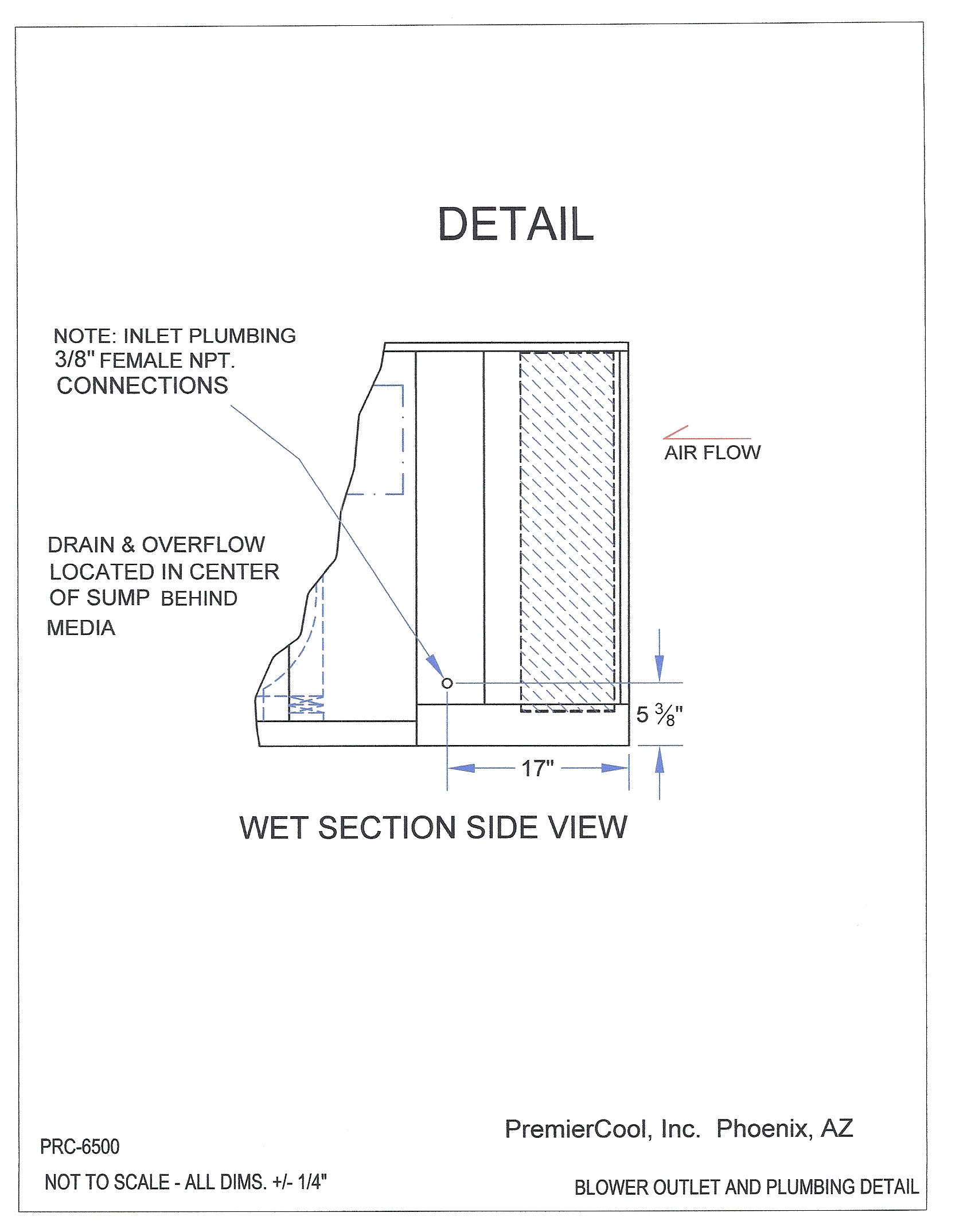
Side view drawings help confirm overall unit profile, placement, access, and installation planning details before equipment is selected.
“`
Quick Links for Evaporative Cooler Drawing References
The drawing links below are useful for confirming equipment orientation, discharge opening dimensions, wet section layout, and replacement wet section fitment. If a project also requires airflow planning, operating weight, motor range, or model comparison, combine these drawings with Premier’s evaporative cooler graphs and specs.
“`
Residential evaporative cooler drawings
PremierCool residential side view
Open the PremierCool residential evaporative cooler side view drawing to review the overall side profile for layout, access planning, and dimensional context.
Discharge opening dimensions
Open the PremierCool residential evaporative cooler discharge opening drawing to confirm discharge size and connection planning details.
Wet section and plumbing detail
Review the wet section and plumbing detail reference for basic planning when confirming water-side configuration and connection considerations.
Replacement wet section drawing
Open the Premier evaporative cooling module drawing for replacement wet section fitment and configuration review.
Need help confirming the right file?
If you are unsure which drawing applies to your equipment, contact Premier’s evaporative cooler team with the model, photos, dimensions, discharge orientation, and any installation constraints.
“`
Residential Evaporative Cooler Drawings
Residential evaporative cooler drawings are useful for confirming unit orientation, discharge opening location, dimensional relationships, and basic installation requirements. These details matter when replacing equipment, planning a new installation, checking space limitations, or reviewing how the unit will connect to the home or duct system.
“`
Evaporative cooler specs and drawings for residential installation planning
Use the residential drawing references to review the cooler side profile, discharge opening, and related wet section details. If you are comparing the residential product category before reviewing drawings, Premier’s residential evaporative cooler information can help frame the application, maintenance expectations, and climate fit.
What the residential drawings help confirm
- Unit orientation: Helps determine how the cooler sits in relation to the roof, wall, ductwork, or opening.
- Discharge opening sizing: Helps support duct connection planning and outlet alignment.
- Service access: Helps confirm whether maintenance areas can be reached after installation.
- Wet section relationship: Helps review water-side placement, media access, and basic equipment layout.
- Installation feasibility: Helps identify fit or clearance issues before equipment is ordered.
Use drawings with airflow data
Drawings confirm fit and layout, while CFM charts help confirm airflow. Both should be reviewed together before selecting equipment. If you are also comparing cooling expectations by climate, Premier’s swamp cooler humidity chart can help set realistic expectations.
Fit comes before final selection
A cooler that looks correct by capacity can still create problems if the discharge opening, access clearance, support structure, or service area does not fit the installation location.
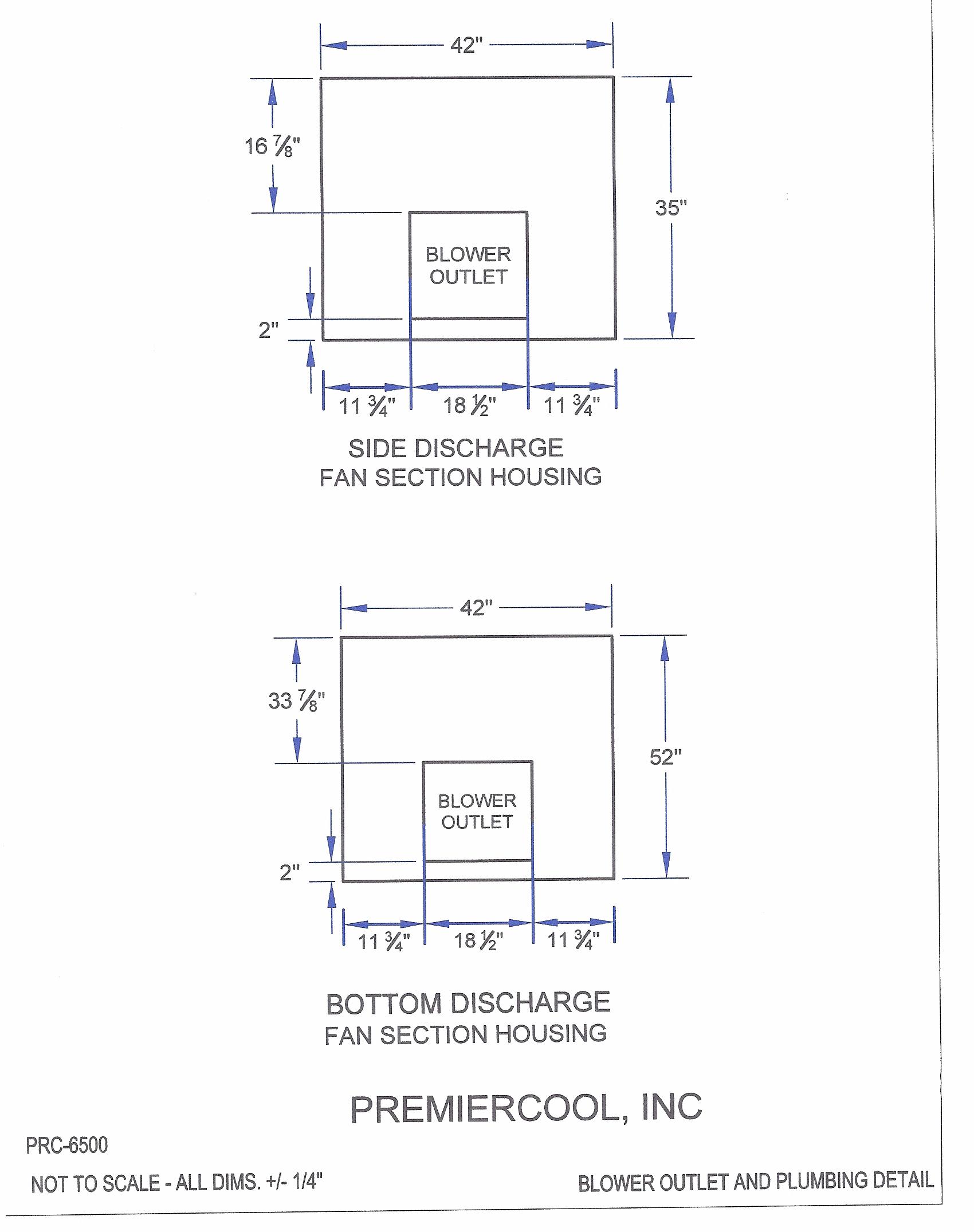
Discharge opening details help contractors and buyers confirm outlet sizing before connecting equipment to the planned air path.
“`
Replacement Stainless Steel Wet Section Drawings
Replacement wet section drawings help confirm configuration when upgrading or replacing the water-side portion of an existing cooler. A wet section may need replacement when the sump is leaking, the structure is corroded, water distribution is unreliable, the media is not supported correctly, or repeated media problems are tied to the condition of the wet section.
“`
MasterCool replacement wet section drawing reference
Open the Premier evaporative cooling module drawing to review replacement wet section fitment and configuration details. This reference is useful when comparing dimensions, media area, and replacement requirements for MasterCool-style 4500 CFM and 6500 CFM cooler applications.
For more detailed wet section information, review Premier’s Mastercool replacement wet sections. That resource includes stainless steel construction details, sizing information, media depth references, sump construction, water controls, and replacement planning guidance.
When a wet section drawing is useful
- The existing wet section is corroded or leaking
- Replacement media is failing because water distribution is poor
- The sump, float, pump, or distribution system needs review
- Fitment needs to be confirmed before ordering replacement parts
- Maintenance crews need a clearer view of the replacement configuration
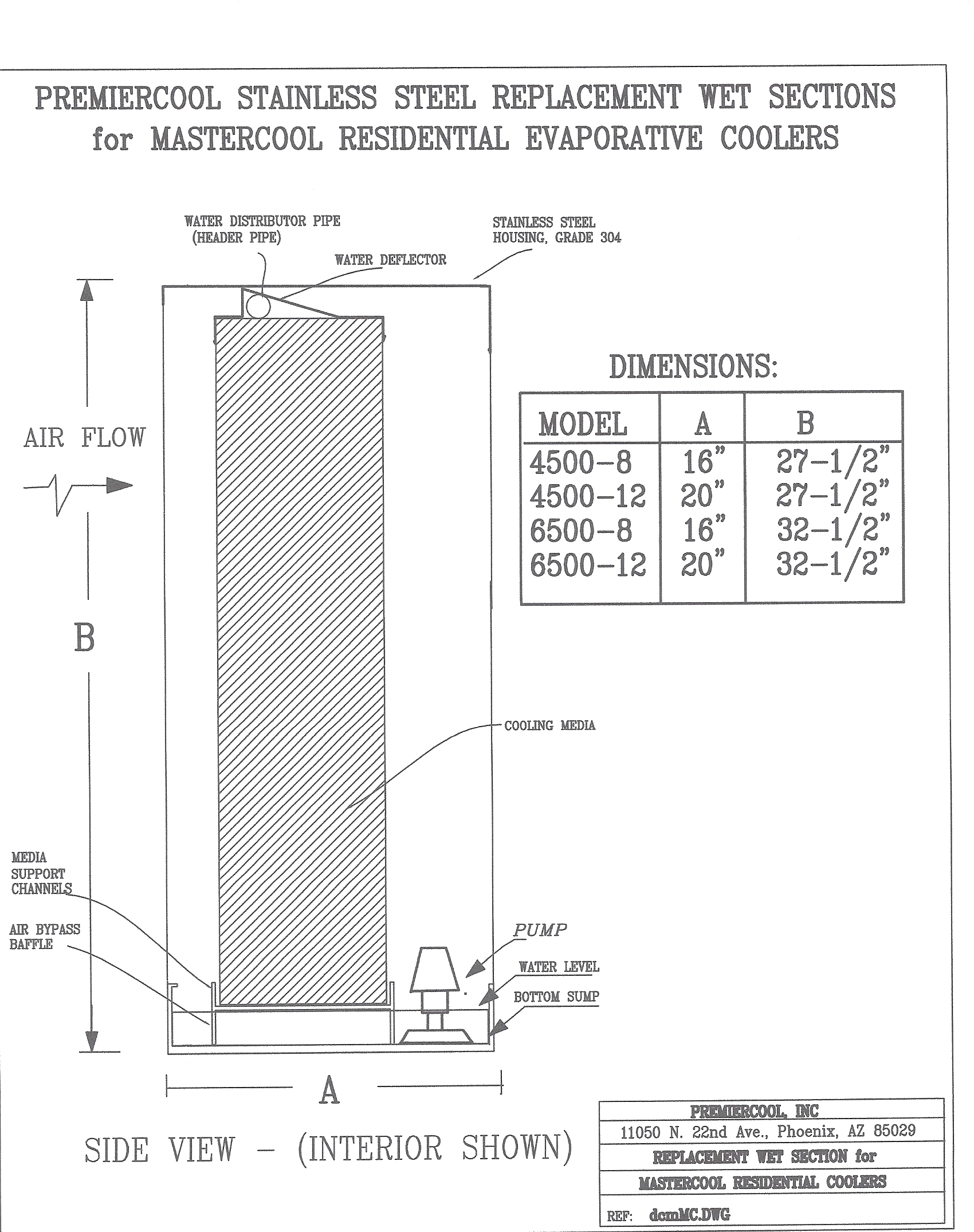
Replacement wet section drawings help confirm fitment, configuration, and water-side planning before ordering parts.
“`
Use Drawings With CFM Charts, Weights, and Model Specs
Drawings are not a replacement for performance data. They help confirm how the cooler fits, while CFM charts help confirm how the cooler performs. Before selecting a model, review delivered airflow, motor range, operating weight, unit dimensions, and installation requirements together.
“`
How drawings and specs work together
| Planning Detail | Why It Matters | Helpful Resource |
|---|---|---|
| Delivered airflow | Helps match cooling capacity to space size, heat load, and ventilation goals | Evaporative cooler CFM charts and specs |
| Unit dimensions | Helps confirm clearance, access, curb sizing, and placement | Residential cooler side view drawing |
| Discharge opening | Helps confirm outlet size and air path connection planning | Discharge opening dimensions drawing |
| Wet section configuration | Helps confirm replacement fit, media support, and water-side layout | Replacement wet section specifications |
| Operating weight | Helps with roof, platform, stand, curb, and structural review | Model weights and mechanical specs |
Do not rely on airflow alone
A model can have the right CFM range and still be the wrong choice if the installation location cannot support the dimensions, discharge orientation, maintenance access, or operating weight. Use drawings and charts together before making a final equipment decision.
“`
Installation Planning Details to Confirm Before Ordering
Before ordering a cooler or replacement component, confirm the field conditions that affect installation. This includes the available opening, curb or stand dimensions, roof or wall access, duct connection, service clearance, water supply, electrical requirements, and future media replacement access.
“`
Evaporative cooler installation details worth checking early
Discharge direction
Confirm where the cooled air exits the unit and how that opening connects to the planned duct or air path.
Service clearance
Make sure panels, media, pumps, water controls, and maintenance areas can be accessed after installation.
Weight support
Review operating weight, not only dry weight, because evaporative coolers hold water during normal operation.
Water and electrical access
Confirm make-up water, drainage, controls, pump power, and electrical needs before setting equipment.
Budget planning and install scope
Installation cost can include equipment, labor, electrical work, water connection, roof or wall preparation, ducting, controls, structural support, and replacement media. Premier’s evaporative cooler installation cost guide can help buyers understand the broader project scope before ordering equipment.
“`
Specs, Media, and Long-Term Service Planning
Specs and drawings help with installation planning, but long-term performance depends on maintenance access, media condition, water distribution, and seasonal upkeep. A cooler that cannot be serviced easily may become harder to keep clean, efficient, and reliable over time.
“`
Cooling media should be part of the planning conversation
Media depth, size, and access should be reviewed during equipment selection or replacement work. If the current cooler has reduced performance, the issue may involve clogged or deteriorated media instead of the full unit. Premier provides guidance on evaporative cooling media, replacement evaporative cooler media, CELdek evaporative cooling media, GLASdek evaporative cooling media, and KÜÜL evaporative cooling pads.
Maintenance planning affects equipment life
Water quality, cleaning frequency, pad replacement, and seasonal startup or shutdown practices all affect evaporative cooler performance. Premier’s swamp cooler maintenance guide and article on how often to replace swamp cooler pads can help owners plan upkeep after equipment is installed.
Water quality can change media performance
Hard water, mineral buildup, and poor bleed-off can reduce media life and lower cooling performance. If repeated scale or clogging is a concern, review Premier’s guide on how water quality affects evaporative cooling performance.
Compare cooling approaches when needed
If you are still deciding whether evaporative cooling is the right fit, Premier’s swamp cooler vs AC guide explains the differences in climate fit, operating cost, humidity, and comfort expectations.
“`
Related Evaporative Cooler Products and Planning Resources
Specs and drawings are part of a larger planning process. Depending on the project, you may also need product details, accessories, replacement media, a wet section, or general performance resources before selecting a final solution.
“`
Continue comparing evaporative cooling options
Evaporative coolers
Compare Premier’s full evaporative cooler equipment options for different building types and cooling needs.
Graphs and specs
Use evaporative cooler graphs and specs for CFM ranges, motor ranges, dimensions, and operating weights.
Products and accessories
Review evaporative cooling products and accessories for replacement parts, components, and related support items.
Shop
Browse the Premier Industries shop for available parts, media, and cooling accessories.
External technical reference
For broader HVAC planning, airflow, and industry guidance, ASHRAE is a respected external source for heating, ventilation, air conditioning, and refrigeration information.
“`
Need Help Matching a Drawing to Your Model?
If you are unsure which drawing applies to your unit, Premier can help review the equipment details and point you toward the right reference. Helpful information includes the current model, approximate dimensions, discharge direction, photos of the unit, installation location, and whether the project involves a new cooler, replacement media, or a replacement wet section.
For drawing support, fitment questions, or equipment selection help, contact Premier Industries or call 602-997-8754. You can also review Premier’s evaporative cooling resources for maintenance, humidity, wiring, and product planning support.
“`
“`
Frequently Asked Questions About Evaporative Cooler Specs and Drawings
“`
What are evaporative cooler specs and drawings used for?
They are used to confirm dimensions, discharge openings, unit orientation, service access, wet section configuration, and installation planning details before ordering or replacing evaporative cooling equipment.
Where can I find CFM charts for Premier evaporative coolers?
Premier’s evaporative cooler graphs and specs include delivered airflow ranges, motor ranges, blower sizes, pump horsepower, dry weights, operating weights, and model dimensions.
Why should I check drawings before ordering a cooler?
Drawings help confirm fit, discharge orientation, available clearance, and connection details. This can help prevent ordering mistakes, installation delays, and access problems.
Do evaporative cooler drawings show performance?
Drawings mainly show physical layout, dimensions, and configuration. Use CFM charts and specs to compare airflow, operating weight, motor range, and performance-related details.
How do I confirm discharge opening size?
Use the discharge opening drawing to review the opening size and connection details, then compare that information with the planned duct, outlet, or installation opening.
When should I review replacement wet section drawings?
Review replacement wet section drawings when the sump is leaking, the wet section is corroded, media is not being wetted evenly, or a MasterCool-style replacement wet section is being considered.
Do drawings help with replacement media selection?
Drawings can help with layout and fitment, but media should also be confirmed by width, height, depth, equipment design, and current wet section condition.
Can Premier help me match the correct drawing to my unit?
Yes. Premier can help review unit photos, model information, dimensions, discharge orientation, and project details to point you toward the most relevant drawing or specification reference.
“`
Get a Quote