
Evaporative cooler modules from Premier Industries, Inc. provide practical fresh-air cooling for homes, commercial spaces, warehouses, shops, industrial buildings, and dry-climate applications that need reliable airflow without relying on vapor compression refrigeration. These systems cool air through water evaporation, which can reduce energy use and add useful moisture in hot, arid environments.
Evaporative cooling modules work by moving warm outside air across wetted media. As water evaporates, heat is removed from the air stream before cooler air is delivered into the space. The process is especially effective in dry regions where the air can absorb moisture more easily. If you are comparing evaporative cooling with refrigerated air conditioning, Premier’s swamp cooler vs AC guide explains the differences in climate fit, operating cost, humidity, and comfort.
“`
Evaporative Cooler Modules for Efficient Fresh-Air Cooling
Evaporative cooling modules are often selected when airflow, efficiency, ventilation, and simple long-term serviceability matter. They can support comfort cooling, process-area cooling, warehouse ventilation, equipment-area cooling, and other applications where bringing in outside air is a benefit rather than a drawback.
Evaporative cooler modules should match climate, airflow, and media needs
The right module depends on delivered airflow, cooling media, water distribution, installation location, humidity conditions, and the type of space being cooled. For airflow and model planning, Premier’s evaporative cooler CFM charts and specs and evaporative cooler specs and drawings can help buyers review performance and fit before selecting equipment.
Moves outside air through wetted media for evaporative cooling
Best suited for hot, arid environments
Cooling depends on media quality and water distribution
Premier can help with equipment and module planning
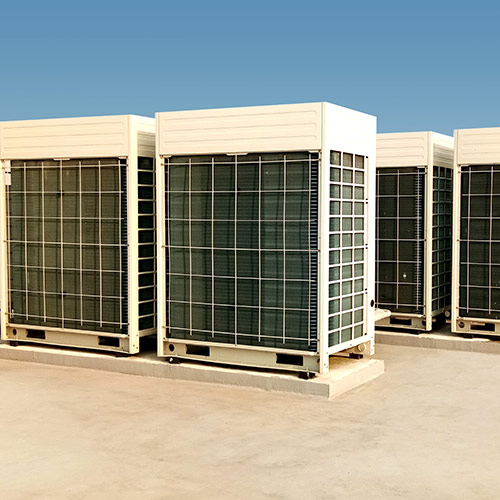
Evaporative cooler modules can be used in roof-mounted and exterior configurations where fresh-air cooling, ventilation, and service access are part of the equipment plan.
“`
How Evaporative Cooler Modules Work
Evaporative cooler modules cool air through evaporation rather than mechanical refrigeration. Water absorbs heat as it evaporates, which lowers the temperature of the air passing through the wetted media. This is the same natural cooling process that makes dry air feel cooler when moisture evaporates from a surface.
“`
Evaporative cooler modules use water, air, and media together
When the outside temperature rises above the cooling setpoint, the system allows water to move through the distribution system and over the cooling media. The media becomes wetted through its depth, while airflow is pulled or pushed across the media surface. As air contacts the wetted media, water evaporates and removes heat from the air stream.
Warm outside air enters
The module draws in outdoor air that will pass through wetted evaporative cooling media.
Media is wetted
Water distribution keeps the cooling media saturated enough for evaporation to occur.
Evaporation removes heat
As water evaporates into the air stream, heat is absorbed and the delivered air temperature drops.
Cooler air is delivered
The conditioned air moves into the building or work area while excess air exits through a planned ventilation path.
Humidity determines how much cooling is possible
Evaporative cooling is strongest when outdoor air is dry. If humidity rises, evaporation slows and the temperature drop becomes smaller. Premier’s swamp cooler humidity chart can help buyers understand how relative humidity affects delivered air temperature before choosing equipment.
“`
Performance Factors That Affect Evaporative Cooler Modules
A cooling module performs best when airflow, water distribution, media depth, humidity, and installation design are all matched correctly. If one of those factors is off, the system may still run but deliver weaker cooling than expected.
“`
Evaporative cooler modules depend on airflow and wet media
The cooling effect happens at the media. Air must pass through wetted media evenly, and water must be distributed across the media surface without dry streaks or heavy scaling. When media is clean, properly sized, and evenly wetted, the system can deliver more consistent cooling. When media is clogged, damaged, or poorly wetted, airflow and cooling output can suffer.
Key performance drivers
- Delivered airflow: The module must move enough air for the building, work area, or process zone.
- Media condition: Clean, properly wetted media supports stronger evaporation and airflow.
- Water distribution: The pump, manifold, nozzles, header, and distribution system must wet the media evenly.
- Outdoor humidity: Dry air supports stronger cooling than humid air.
- Ventilation path: Air needs a path through and out of the space.
- Installation location: Roof, wall, platform, or exterior placement affects access, ducting, and serviceability.
Use actual airflow data before selecting equipment
Model selection should be based on actual delivered airflow, not a vague cooling estimate. Premier’s evaporative cooler graphs and specs provide CFM ranges, dimensions, motor ranges, dry weights, and operating weights for planning.
Technical reference
For broader HVAC performance and ventilation guidance, ASHRAE is a respected external source for heating, ventilation, air conditioning, and refrigeration information.

Module configuration, airflow path, and service access should be reviewed before final equipment selection.
“`
Evaporative Cooler Modules Compared With Standard AC
Evaporative cooler modules and standard air conditioning systems cool air in very different ways. Refrigerated AC removes heat through vapor compression and can also remove moisture from the air. Evaporative cooling uses water evaporation and fresh-air movement, which is why it can use less energy in the right climate but is more sensitive to humidity.
“`
When evaporative cooler modules make sense
Evaporative modules are often a strong fit where the climate is dry, the building benefits from outdoor air exchange, and operating cost matters. They can be especially useful in large or active spaces where sealing the building for refrigerated cooling is impractical or expensive.
| Comparison Point | Evaporative Cooler Modules | Refrigerated AC |
|---|---|---|
| Cooling process | Water evaporation removes heat from incoming air | Vapor compression refrigeration removes heat from indoor air |
| Best climate fit | Hot, dry climates | Dry or humid climates |
| Humidity effect | Adds moisture and performs best when air is dry | Can remove moisture from indoor air |
| Air strategy | Fresh-air cooling with ventilation path | Often recirculates conditioned indoor air |
| Typical operating cost | Often lower in suitable climates | Often higher because of compressor operation |
Compare climate and comfort before choosing
Evaporative cooling can be an excellent option in the right environment, but it is not the best answer for every climate. Use Premier’s swamp cooler vs AC comparison and evaporative cooler installation cost guide when comparing equipment cost, climate fit, humidity, and long-term operation.
“`
What Are the Main Parts of an Evaporative Cooler Module?
Understanding the main components makes it easier to plan maintenance, identify replacement needs, and evaluate cooling performance. An evaporative cooler module is not complicated in concept, but each component has to work properly for the system to cool effectively.
“`
Evaporative cooler module components to know
Cooling media
The wetted media creates the surface area where air and water interact. Media quality and condition directly affect cooling output.
Water pump
The pump moves water from the sump or water source to the distribution system so the media stays wetted.
Blower or fan
The blower moves air through the media and into the cooled space or duct path.
Motor
The motor drives the blower or fan and must match the airflow and performance requirements of the module.
Bearings and shaft
Bearings allow rotating components to move smoothly and may need service when noise, vibration, or wear appears.
Pulleys and belts
Pulleys and belts transfer power from the motor to the blower assembly in many evaporative cooler designs.
Water pump and media performance are closely linked
The water pump keeps the cooling media saturated. If the pump cannot keep up, the media may develop dry areas and the module may move warm air instead of cooled air. If the pump is working but media is clogged, scaled, or deteriorated, the system may still underperform. Premier’s evaporative cooling media, replacement evaporative cooler media, and replacement wet sections can help when performance issues are tied to media or water-side components.
Core components include the blower, motor, pump, media, water distribution system, pulleys, belts, and serviceable mechanical parts.
“`
Cooling Media and Water Distribution in Evaporative Cooler Modules
The cooling media is one of the most important parts of an evaporative cooler module. It must hold water, allow airflow, resist deterioration, and provide enough surface area for evaporation. Water distribution must keep that media evenly wetted without flooding, dry streaking, or clogging the system.
“`
Cooling media affects evaporative cooler module efficiency
Media can vary by type, depth, flute geometry, durability, and maintenance needs. Premier provides information on CELdek evaporative cooling media, GLASdek evaporative cooling media, and KÜÜL evaporative cooling pads for buyers comparing replacement or specification options.
Signs media or water distribution needs attention
- Dry streaks: Sections of the media are not receiving enough water.
- Reduced cooling: Airflow may be present, but delivered air is not cooling as expected.
- Scale buildup: Mineral deposits restrict airflow and water movement.
- Odor: Dirty media, stagnant water, or poor drying cycles can create odor issues.
- Uneven airflow: Blocked or damaged media can reduce the volume of air moving through the module.
- Short media life: Poor water quality or distribution problems can cause premature deterioration.
Replacement timing matters
Media should be inspected regularly and replaced when cleaning no longer restores airflow or cooling output. Premier’s guide on how often to replace swamp cooler pads can help owners identify replacement signs before the system loses too much performance.
Water quality can change media life
Hard water and mineral buildup can shorten media life and increase maintenance needs. Premier’s article on how water quality affects evaporative cooling performance explains why water chemistry and bleed-off should be considered during maintenance planning.
“`
Where Evaporative Cooler Modules Are Commonly Used
Evaporative cooler modules can be useful in many applications where fresh-air cooling and lower operating cost are priorities. The best fit depends on building type, heat load, airflow needs, climate, installation location, and whether the space can exhaust air effectively.
“`
Common applications for evaporative cooler modules
| Application | Why Evaporative Cooling Helps | Helpful Premier Resource |
|---|---|---|
| Warehouses | Supports broad airflow and heat relief in larger spaces | Industrial evaporative coolers |
| Commercial shops | Helps move fresh air through active work areas and service bays | Commercial evaporative coolers |
| Residential properties | Can provide efficient comfort cooling in dry climates | Residential evaporative coolers |
| Outdoor or semi-open areas | Can provide localized airflow and cooling where AC is impractical | Portable swamp coolers |
| Ventilation-heavy buildings | Can support fresh-air movement and cooling together | Makeup air units |
Custom module planning
Some applications require custom equipment planning, especially when the cooling target involves large spaces, stored goods, production conditions, or consistent temperature control. Premier can help customers evaluate airflow, module configuration, media needs, and equipment options before purchasing.
“`
Evaporative Cooler Module Maintenance
Evaporative cooler modules are serviceable systems, but they still need routine maintenance to keep airflow, cooling media, water distribution, pumps, and mechanical components working properly. Preventive maintenance helps reduce scaling, odor, weak cooling, premature media replacement, and unexpected downtime.
“`
Maintenance tasks that protect evaporative cooler modules
- Inspect cooling media: Look for scale, clogging, sagging, odor, dry streaks, or visible damage.
- Clean the water system: Keep the sump, distribution tubing, filters, pump, and drain areas free of debris.
- Check the pump: Confirm water reaches the media evenly and the pump is not undersized or failing.
- Review airflow: Check belts, pulleys, blower operation, motor performance, ducts, louvers, and exhaust paths.
- Lubricate serviceable bearings: Address squeaking, vibration, or rotating component issues before damage spreads.
- Monitor humidity: Use humidity conditions to set realistic cooling expectations throughout the season.
- Plan seasonal shutdown: Drain, clean, dry, and protect the system when cooling season ends.
Use maintenance resources before performance drops
Premier’s swamp cooler maintenance guide gives a broader seasonal checklist for cleaning, startup, shutdown, media, and water system care. If performance is limited by humidity rather than maintenance, the swamp cooler humidity chart can help explain the expected temperature drop.
“`
Choosing the Right Evaporative Cooler Module
The right module should match the cooling goal, building type, airflow requirement, installation area, climate, and long-term maintenance plan. A module that is too small may fail to deliver enough air. A module that is poorly matched to the installation may create service problems or weak cooling even if the equipment itself is well built.
“`
Selection factors to review before ordering
Delivered CFM
Compare actual airflow needs with Premier’s performance data before selecting a model range.
Installation location
Review roof, wall, platform, ducting, curb, and service access requirements before ordering.
Climate conditions
Confirm humidity levels and expected cooling performance for the location.
Media and wet section
Make sure media depth, water distribution, and wet section design support the intended performance.
Cost planning should include more than equipment price
Installation cost can include equipment, labor, structural support, electrical work, water supply, controls, ducting, access, and long-term replacement parts. Premier’s evaporative cooler installation cost guide can help buyers consider the full project before selecting a module.
“`
Related Evaporative Cooling Products and Resources
Evaporative cooler module planning often overlaps with equipment specs, replacement media, wet sections, performance charts, and products. Use these resources to compare options and narrow the right solution.
“`
Continue comparing evaporative cooling options
Evaporative coolers
Review Premier’s evaporative coolers for a broader look at available equipment options.
Products and accessories
Explore evaporative cooling products and accessories for components, parts, and support items.
Resources
Use Premier’s evaporative cooling resources for humidity, wiring, maintenance, specs, and product planning guidance.
Shop
Browse the Premier Industries shop for available parts, media, and accessories.
“`
Get Help With Evaporative Cooler Module Planning
Premier Industries has manufactured evaporative cooling equipment for decades and can help customers evaluate cooling module needs, airflow ranges, media, wet sections, replacement components, and custom equipment considerations. The right module can help improve comfort, reduce operating costs, and support long-term serviceability in the right climate.
If you need help comparing module options, reviewing airflow needs, matching replacement components, or planning a custom evaporative cooling solution, contact Premier Industries or call 602-997-8754.
“`
“`
Frequently Asked Questions About Evaporative Cooler Modules
“`
What is an evaporative cooler module?
An evaporative cooler module is a cooling system or cooling section that uses water evaporation and airflow through wetted media to lower the temperature of incoming air.
How do evaporative cooler modules work?
Warm outside air passes through wetted cooling media. As water evaporates into the air stream, heat is removed and cooler air is delivered into the space.
Where do evaporative cooler modules work best?
They work best in hot, dry climates where the air can absorb moisture easily. Performance is reduced in humid conditions because evaporation slows down.
Are evaporative cooler modules more efficient than AC?
In suitable dry climates, evaporative cooling can use less energy than refrigerated air conditioning. The best choice depends on humidity, comfort expectations, building type, and cooling goals.
What parts are inside an evaporative cooler module?
Common parts include cooling media, water pump, blower or fan, motor, pulleys, belts, bearings, water distribution components, sump or wet section, and cabinet components.
How does cooling media affect module performance?
Cooling media provides the wetted surface area where evaporation happens. Clean, evenly wetted media supports better cooling, while clogged, scaled, or damaged media reduces performance.
When should evaporative cooler media be replaced?
Media should be replaced when it is scaled, clogged, deteriorated, unevenly wetted, producing odor, or no longer supporting effective cooling after cleaning.
Can Premier help with custom evaporative cooler modules?
Yes. Premier can help customers evaluate airflow, media, module configuration, replacement parts, and custom evaporative cooling equipment needs.
How do I choose the right evaporative cooler module?
Start with airflow needs, climate conditions, installation location, media requirements, water distribution, service access, and long-term maintenance expectations.
“`
Get a Quote