
Evaporative cooling resources from Premier Industries, Inc. help buyers, facility managers, engineers, technicians, and maintenance teams compare equipment, review performance data, understand humidity limits, troubleshoot common issues, and plan replacement parts with more confidence. Whether you are choosing a new cooler, replacing media, reviewing CFM performance, or trying to understand why a unit is not cooling as expected, this resource center gives you a cleaner path to the right technical information.
Evaporative cooling works best when equipment selection, airflow, media condition, water distribution, humidity, and maintenance are reviewed together. A single chart or diagram can help, but the best decisions usually come from connecting the full picture. If you are comparing equipment against refrigerated air conditioning, Premier’s swamp cooler vs AC guide is a helpful place to start. If you already know you need equipment support, reach out to our evaporative cooling specialists.
“`
Evaporative Cooling Resources for Specs, Performance, and Troubleshooting
Use this page to access evaporative cooler specifications, CFM charts, humidity guidance, wiring diagrams, maintenance articles, replacement media information, and related product pages. The goal is simple: help you move from a question to the right next step without digging through unrelated information.
Evaporative cooling resources for better equipment decisions
If you are selecting equipment, start with airflow and sizing references. If performance has dropped, review humidity, water distribution, and media condition. If you need parts, compare replacement media, wet sections, and accessories before ordering. For cost planning, Premier’s evaporative cooler installation cost guide can help frame equipment, installation, and budgeting factors.
Review dimensions and technical documentation
Compare airflow and performance references
Understand climate limits before selecting equipment
Find media, water, wiring, and upkeep resources
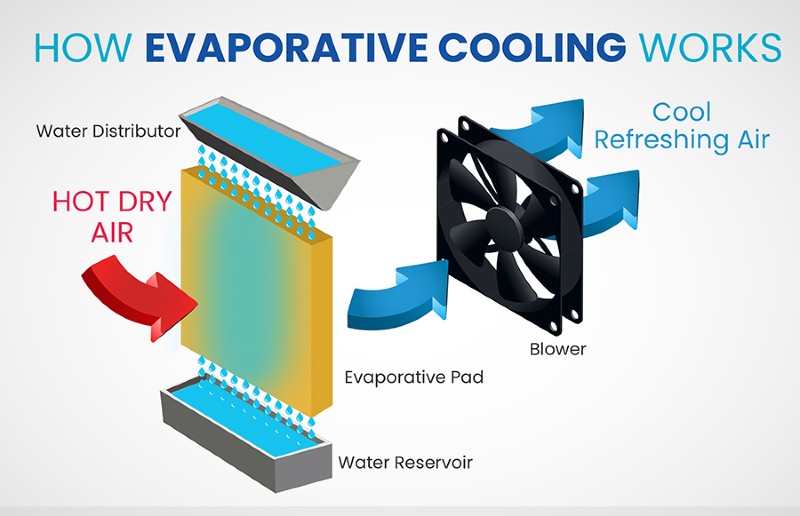
Evaporative cooling depends on airflow through wetted media, proper ventilation, and dry enough outdoor air for evaporation to remove heat.

System comparisons are easier when climate, airflow, humidity, operating cost, and comfort expectations are reviewed together.
“`
Quick Links for Evaporative Cooler Specs and Guides
Use these technical and planning resources when you need to confirm equipment details, compare airflow, review humidity expectations, solve wiring questions, or move into product selection. For many buyers, the right path depends on whether the current need is sizing, troubleshooting, maintenance, replacement parts, or a new cooling system.
“`
Find the right evaporative cooling resource fast
Specs and CFM performance
Use evaporative cooler specs and CFM performance charts to compare airflow and performance information before selecting equipment.
Specs and drawings
Review evaporative cooler specs and drawings when dimensions, submittals, and equipment documentation matter.
Humidity chart
Use the swamp cooler humidity chart to understand how humidity affects evaporative cooling output.
Switch wiring diagram
Review the evaporative swamp cooler switch wiring diagram for basic wiring reference and switch replacement guidance.
Product and equipment links
If you are ready to compare equipment instead of reading technical references, review Premier’s evaporative coolers, industrial evaporative coolers, commercial evaporative coolers, and evaporative cooling products and accessories.
“`
How Evaporative Cooling Works
Evaporative cooling uses the natural cooling effect of water evaporation. Warm outside air is drawn through wetted media. As water evaporates from the media surface, heat is removed from the air stream. The cooler air is then delivered into the building, shop, warehouse, home, or work area.
“`
Airflow, water, and media all have to work together
The main performance drivers are airflow volume, media condition, water distribution, outdoor humidity, and exhaust path. If any of those are off, the cooler may still run but fail to deliver the expected temperature drop. A clean fan and pump cannot overcome clogged media, poor water flow, or outdoor humidity that is too high for strong evaporative performance.
Core performance factors
- Airflow: The system must move enough air through the media and into the space.
- Media saturation: The cooling media needs even wetting across the surface.
- Water quality: Hard water and mineral buildup can shorten media life and restrict performance.
- Humidity: Lower humidity allows more evaporation and stronger cooling output.
- Ventilation: Air must have a path through and out of the building for best performance.
Why humidity changes the result
Evaporative cooling is strongest in hot, dry climates because dry air can absorb more moisture. When humidity rises, the temperature drop decreases. For broader climate and humidity background, NOAA’s humidity overview provides a useful external reference.
Practical takeaway
Before assuming a cooler is failing, check humidity conditions, media condition, water distribution, airflow path, and maintenance history.
Understanding the main cooler components makes troubleshooting airflow, pump, media, and water distribution issues much easier.
“`
Find Evaporative Cooling Information by Goal
Different users come to evaporative cooling research with different needs. A facility manager may need CFM and sizing help. A technician may need maintenance or wiring guidance. A buyer may need to compare equipment types. A purchasing team may need replacement media, wet sections, or drawings. Use the sections below to narrow the next best resource.
“`
If you are selecting a new evaporative cooler
- Compare evaporative cooler equipment options based on building type, airflow needs, and operating environment.
- Use CFM performance charts to evaluate airflow and expected performance.
- Review swamp cooler vs AC comparisons if you are still deciding between evaporative and refrigerated cooling.
- Check the swamp cooler humidity chart to understand whether climate conditions support strong evaporative performance.
If you are maintaining an existing cooler
- Start with Premier’s swamp cooler maintenance guide for seasonal cleaning and upkeep.
- Review how often to replace swamp cooler pads if media is scaled, clogged, damaged, or losing performance.
- Compare replacement evaporative cooler media when pads or media sections can no longer be restored through cleaning.
- Review replacement wet sections if the sump, frame, or water distribution system is corroded, leaking, or failing.
If you are troubleshooting weak cooling
Weak cooling can come from humidity, low airflow, dirty media, poor water distribution, plugged filters, a failing pump, or poor exhaust planning. Use performance charts and humidity resources first, then inspect the cooling media and water system before assuming the cooler itself is undersized.
“`
Evaporative Cooler Selection Resources
Choosing the right evaporative cooler depends on application, space size, airflow requirement, installation type, climate, water availability, maintenance expectations, and budget. Commercial spaces, industrial facilities, homes, and portable cooling needs should not be evaluated the same way.
“`
Compare evaporative cooler types before ordering
| Cooling Need | Best Starting Resource | What to Review |
|---|---|---|
| Facility or plant cooling | Industrial evaporative coolers | Airflow demand, heavy-duty construction, heat load, operating hours |
| Warehouse, shop, or business cooling | Commercial evaporative coolers | Building size, ventilation, comfort goals, installed equipment needs |
| Home cooling | Residential evaporative coolers | Home size, climate, ducting, media maintenance, seasonal use |
| Flexible spot cooling | Portable swamp coolers | Mobility, area size, water access, local airflow, short-term cooling needs |
| Air replacement and ventilation | Makeup air units | Ventilation requirements, building pressure, exhaust systems, air exchange |
Cost planning belongs early in the process
Equipment price is only one part of the decision. Installation, electrical work, roof or wall access, ducting, water supply, controls, media replacement, and maintenance all affect the real cost. Premier’s evaporative cooler installation cost guide can help buyers understand the bigger picture before selecting equipment.
“`
Cooling Media, Pads, and Replacement Part Resources
Cooling media condition is one of the most common reasons evaporative coolers lose performance. Even a well-built cooler can struggle if the pads are clogged, scaled, dry in sections, damaged, or not matched to the equipment. Media type, depth, water quality, and replacement timing all matter.
“`
Resources for evaporative cooling media and pads
Evaporative cooling media
Start with evaporative cooling media to compare media purpose, performance factors, and replacement considerations.
Replacement media
Use replacement evaporative cooler media when current pads are worn, damaged, scaled, or no longer cooling efficiently.
CELdek media
Review CELdek evaporative cooling media for engineered cellulose media specifications and product details.
GLASdek media
Compare GLASdek evaporative cooling media when evaluating alternate media options and specification requirements.
KÜÜL pads
Review KÜÜL evaporative cooling pads for pad maintenance guidance, water pH recommendations, and replacement considerations.
Products and accessories
Browse evaporative cooling products and accessories for components, media, and related replacement support.
Water quality can shorten media life
Water chemistry and mineral buildup affect pad life, odor, scale, and cooling output. If replacement media fails too quickly, read Premier’s guide on how water quality affects evaporative cooling performance before replacing the same parts again.
“`
Evaporative Cooler Troubleshooting Resources
Troubleshooting should start with the most common causes before jumping to expensive repairs. In many cases, weak cooling is related to airflow, water distribution, media condition, humidity, or maintenance rather than a complete equipment failure.
“`
Common troubleshooting paths
Weak cooling
Check humidity, media saturation, airflow, water flow, and exhaust path. Use the humidity chart to understand weather limits.
Electrical or switch concerns
Use the swamp cooler switch wiring diagram for basic wiring reference.
Maintenance problems
Review swamp cooler maintenance for cleaning, startup, shutdown, media checks, and water system upkeep.
Media deterioration
Compare swamp cooler pad replacement timing with the current condition of the media.
Use the right resource before replacing equipment
If the cooler is not performing, confirm whether the issue is climate, airflow, water distribution, media condition, sizing, or equipment age. New equipment may be the right answer in some situations, but cleaning, media replacement, wet section repair, or better ventilation planning may solve the problem in others.
“`
Performance Planning for Evaporative Cooling Systems
Performance planning is the difference between buying a cooler that looks right and selecting a system that actually fits the building. Airflow, humidity, media depth, water quality, and ventilation strategy all shape the final result.
“`
Use charts and specs together
CFM charts can help you evaluate airflow. Specs and drawings help confirm dimensions and layout. Humidity charts help set realistic cooling expectations. Maintenance resources help keep the system performing after installation. None of these resources should be used in isolation when the cooling need is important to daily operations.
| Performance Factor | What It Affects | Resource to Use |
|---|---|---|
| CFM and airflow | Coverage, comfort, ventilation, air changes | Specs and CFM performance charts |
| Humidity | Expected temperature drop and comfort | Swamp cooler humidity chart |
| Equipment dimensions | Fit, installation planning, submittals | Specs and drawings |
| Media condition | Cooling output, airflow resistance, water contact | Replacement media |
| Maintenance | Long-term reliability, odor prevention, media life | Maintenance guide |
Cost and system comparison resources
When performance planning overlaps with budgeting, use Premier’s evaporative cooler cost guide. When the larger question is evaporative cooling versus refrigerated air, use the swamp cooler vs AC comparison.
“`
Get Help Using Premier’s Evaporative Cooling Resources
Premier Industries has supported evaporative cooling equipment owners since 1983 with equipment, media, wet sections, parts, accessories, and practical technical guidance. If you are trying to choose a cooler, confirm a specification, troubleshoot performance, replace media, or plan a system upgrade, the right resource can help you avoid guessing.
If you need direct support, get in touch with Premier’s evaporative cooling team or call 602-997-8754. You can also review nationwide evaporative cooling equipment support, browse the Premier Industries shop, or compare the full evaporative cooling product lineup.
“`
“`
Frequently Asked Questions About Evaporative Cooling Resources
“`
Where should I start if I am new to evaporative cooling?
Start with the basic evaporative cooler equipment information, then review the humidity chart and CFM performance charts. Those resources help explain how airflow, climate, media, and sizing affect cooling results.
What resource helps compare swamp coolers and air conditioning?
Premier’s swamp cooler vs AC guide compares evaporative cooling with refrigerated air conditioning across climate fit, operating cost, comfort, humidity, and practical applications.
Where can I find evaporative cooler specs and drawings?
Use Premier’s evaporative cooler specs and drawings for dimensions, technical details, and equipment planning support.
Where can I compare evaporative cooler CFM performance?
Use the evaporative cooler specs and CFM performance charts resource to compare airflow and performance information.
How do I know if humidity will affect my cooler?
Evaporative cooling works best in hot, dry air. Use Premier’s swamp cooler humidity chart to understand how humidity affects expected temperature drop.
What resource should I use for swamp cooler maintenance?
Use Premier’s swamp cooler maintenance guide for seasonal upkeep, cleaning, water system checks, media inspection, and performance protection.
Where can I find replacement media information?
Review replacement evaporative cooler media if existing pads are clogged, scaled, damaged, or no longer supporting efficient cooling.
How often should evaporative cooler pads be replaced?
Replacement timing depends on water quality, operating hours, maintenance, and media condition. Premier’s guide on how often to replace swamp cooler pads explains signs that the media may be ready for replacement.
Can Premier help me choose the right resource or equipment?
Yes. Premier can help customers compare equipment, review specs, match replacement media, evaluate wet sections, and plan evaporative cooling systems based on the application and operating conditions.
“`
Get a Quote