January 27, 2026 3:53 pm
Published by Mike Nicolini
Maintaining precise environmental control is one of the most critical challenges in modern greenhouse operations. Temperature fluctuations, excessive heat buildup, and imbalanced humidity can quickly undermine crop quality, yield consistency, and plant health. For growers seeking a proven, energy-efficient solution, an evaporative cooler for greenhouse applications offers a technically sound and highly effective approach. Evaporative cooling systems have been used for decades in agricultural environments because they leverage natural thermodynamic principles to reduce air temperature while maintaining humidity levels that support optimal plant physiology. Unlike conventional refrigeration-based systems, evaporative coolers are particularly well suited to the unique airflow, moisture, and... View Article
January 27, 2026 3:47 pm
Published by Mike Nicolini
Understanding evaporative cooling water usage is essential for facility managers, homeowners, engineers, and sustainability professionals evaluating cooling solutions in hot and dry climates. Evaporative coolers, commonly referred to as swamp coolers, operate on a fundamentally different thermodynamic principle than traditional vapor compression air conditioners. Instead of relying on refrigerants and energy-intensive compressors, evaporative systems use the natural process of water evaporation to reduce air temperature. While this approach is significantly more energy efficient, it does require a consistent water supply. This raises an important technical and environmental question: how much water does an evaporative cooler actually use, and how can... View Article
 November 11, 2025 6:27 pm
Published by Mike Nicolini
November 11, 2025 6:27 pm
Published by Mike Nicolini
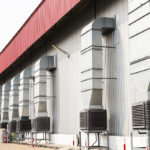
Managing temperature and air quality in large warehouse facilities presents unique challenges, particularly in hot and dry climates where traditional air conditioning systems can be both costly and inefficient. Evaporative cooling in warehouses offers an effective, sustainable, and energy-efficient alternative that not only maintains worker comfort but also improves air quality and reduces overall operational costs. By leveraging natural processes of water evaporation, this cooling method delivers large volumes of cooled, fresh air into industrial spaces, creating a safer and more productive work environment. Benefits of Evaporative Cooling in Warehouses Evaporative cooling systems operate by drawing warm, dry air through... View Article
 November 11, 2025 6:21 pm
Published by Mike Nicolini
November 11, 2025 6:21 pm
Published by Mike Nicolini
Evaporative coolers are an energy-efficient and environmentally friendly solution for keeping residential and industrial spaces comfortable in hot, dry climates. However, excessive evaporative cooler noise levels can be disruptive and may indicate underlying issues within the system. Understanding what causes these noises, how to troubleshoot them, and how to maintain quiet operation is essential for ensuring both performance and comfort. Common Causes of Evaporative Cooler Noise Evaporative coolers, also known as swamp coolers, operate using a straightforward process: warm outside air is drawn through moistened cooling pads, where water evaporates and lowers the air temperature before it is circulated indoors.... View Article
November 11, 2025 3:09 pm
Published by Mike Nicolini
Evaporative cooling systems offer an energy-efficient and environmentally friendly way to cool residential and commercial spaces, especially in arid climates. Understanding the evaporative cooler installation cost is critical for homeowners, contractors, and business owners seeking optimal cooling performance without exceeding budget constraints. The overall expense for installation varies depending on equipment type, size, labor, and infrastructure requirements. Below is a detailed breakdown of installation costs, influencing factors, and budgeting recommendations to help you plan effectively. Average Evaporative Cooler Installation Cost Breakdown Evaporative cooler installation costs generally range between $1,500 and $5,500, depending on unit size, type, and site conditions. Basic... View Article
