November 10, 2026 6:02 pm
Published by Michael Nicolini
A cooler family can look convincing in a Revit view while representing the wrong equipment configuration. Before using an RFA supplied for a project, compare its selected type with the equipment submittal and the drawing for that exact model. Keep the original file and review a copy in the Revit release used by the project. This check applies when a supplier or the project team has provided a loadable family. A product drawing alone does not establish that a corresponding Revit family is available, or that a third-party family has been approved by the manufacturer. Match the model before comparing... View Article
 November 10, 2026 3:48 pm
Published by Michael Nicolini
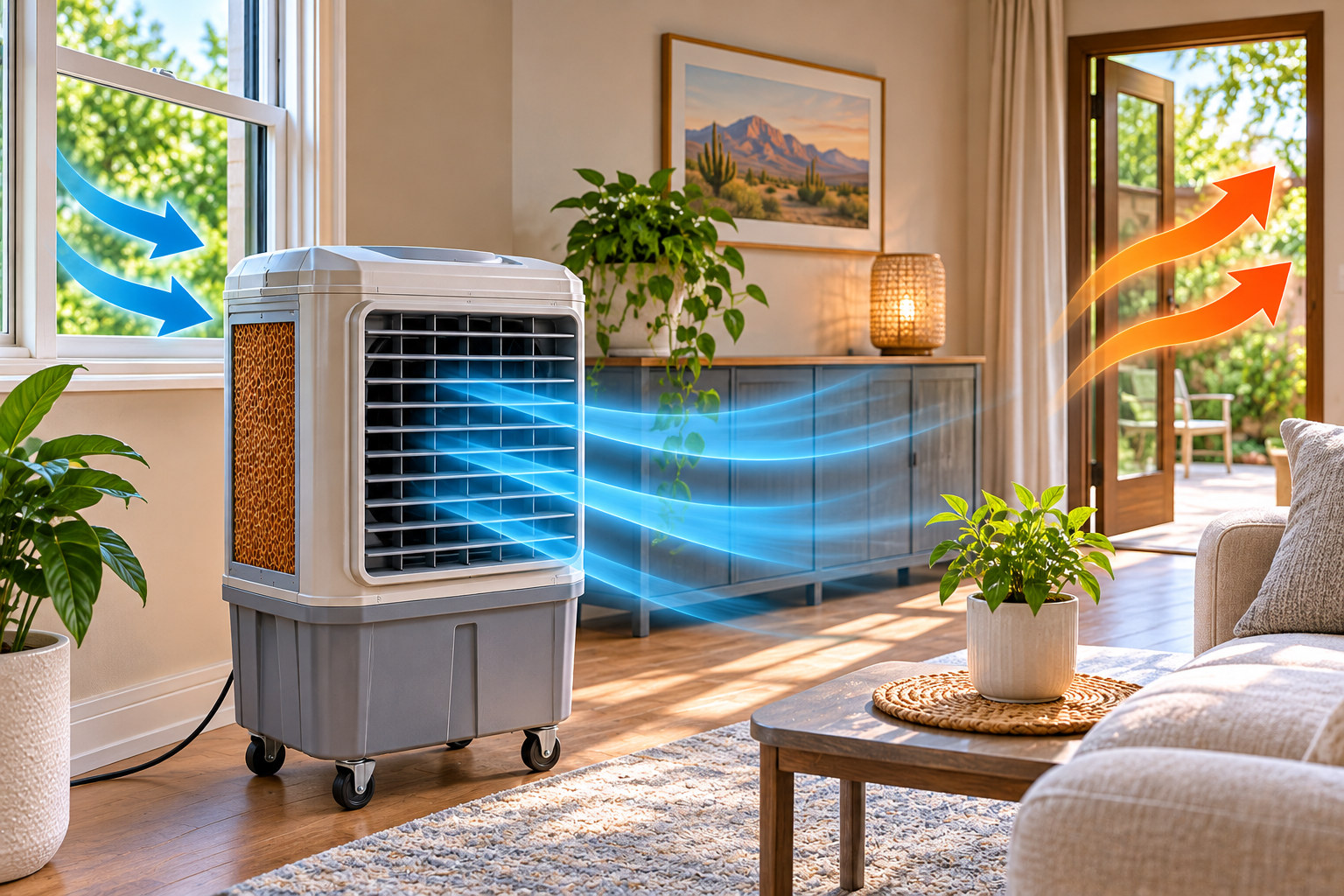
Yes, a swamp cooler works indoors in dry climates if fresh air flows through. Learn setup, humidity limits, best rooms, and when to switch to AC.
January 27, 2026 3:53 pm
Published by Michael Nicolini
Maintaining precise environmental control is one of the most critical challenges in modern greenhouse operations. Temperature fluctuations, excessive heat buildup, and imbalanced humidity can quickly undermine crop quality, yield consistency, and plant health. For growers seeking a proven, energy-efficient solution, an evaporative cooler for greenhouse applications offers a technically sound and highly effective approach. Evaporative cooling systems have been used for decades in agricultural environments because they leverage natural thermodynamic principles to reduce air temperature while maintaining humidity levels that support optimal plant physiology. Unlike conventional refrigeration-based systems, evaporative coolers are particularly well suited to the unique airflow, moisture, and... View Article
January 27, 2026 3:47 pm
Published by Michael Nicolini
Understanding evaporative cooling water usage is essential for facility managers, homeowners, engineers, and sustainability professionals evaluating cooling solutions in hot and dry climates. Evaporative coolers, commonly referred to as swamp coolers, operate on a fundamentally different thermodynamic principle than traditional vapor compression air conditioners. Instead of relying on refrigerants and energy-intensive compressors, evaporative systems use the natural process of water evaporation to reduce air temperature. While this approach is significantly more energy efficient, it does require a consistent water supply. This raises an important technical and environmental question: how much water does an evaporative cooler actually use, and how can... View Article
 November 11, 2025 6:27 pm
Published by Michael Nicolini
Managing temperature and air quality in large warehouse facilities presents unique challenges, particularly in hot and dry climates where traditional air conditioning systems can be both costly and inefficient. Evaporative cooling in warehouses offers an effective, sustainable, and energy-efficient alternative that not only maintains worker comfort but also improves air quality and reduces overall operational costs. By leveraging natural processes of water evaporation, this cooling method delivers large volumes of cooled, fresh air into industrial spaces, creating a safer and more productive work environment. Benefits of Evaporative Cooling in Warehouses Evaporative cooling systems operate by drawing warm, dry air through... View Article
