
Industrial evaporative coolers from Premier Industries, Inc. are built for warehouses, plants, fabrication shops, agricultural operations, and large industrial facilities that need serious airflow, dependable cooling, and rugged long-term performance. Since 1983, Premier Industries has manufactured heavy-duty systems designed for harsh operating conditions, scalable capacity, and real-world serviceability. If you need help comparing airflow, discharge direction, or accessories, reach out to our industrial cooling specialists.
Industrial environments can become brutally hot. When heat lingers across a work floor, employee fatigue increases, equipment performance can suffer, and overall operating conditions become harder to manage. That is why many facilities look to evaporative cooling as a practical way to move large volumes of fresh air while reducing temperature in hot, dry climates. Facilities still evaluating cooling approaches can review our swamp cooler vs AC guide for a direct cost and performance comparison. Buyers comparing broader system categories can also review our main evaporative coolers overview, but this page focuses on heavy-duty industrial applications where airflow and durability are non-negotiable.
Industrial Evaporative Coolers for Large Facilities
Industrial evaporative cooling is often the right fit where square footage is high, ceilings are tall, air turnover matters, and conventional refrigeration becomes expensive to operate or difficult to scale. In the right climate, these systems can lower air temperature while delivering the kind of fresh-air movement that large spaces depend on to remain more workable and productive.
How industrial evaporative coolers reduce heat in working environments
Warm outside air is pulled through water-saturated cooling media. As the water evaporates, heat is absorbed from the incoming air stream. A blower then delivers that cooled air into the facility. The process is straightforward, but performance still depends on climate, airflow design, media quality, water management, and proper sizing. For additional industry guidance on ventilation and thermal comfort, ASHRAE remains a strong technical reference at ASHRAE.
Standard model range for actual air delivered
Supports air exchange across larger open areas
Designed for demanding industrial conditions
Available in side, down, and up discharge configurations
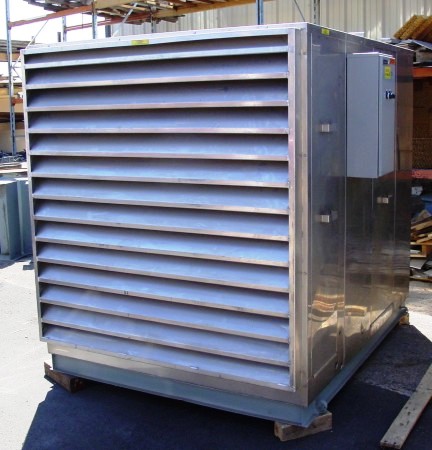
High-capacity industrial evaporative coolers are often selected for facilities that need broad airflow coverage, practical cooling, and durable construction in demanding environments.
Why Industrial Evaporative Coolers Remain a Strong Choice
Facilities do not choose industrial equipment based on buzzwords. They choose it based on whether it can move enough air, stand up to the environment, and remain serviceable over the long haul. That is where industrial evaporative systems continue to earn attention. They are often easier to understand operationally, can be scaled for large spaces, and can provide meaningful cooling in hot, dry regions without leaning entirely on compressor-based equipment.
Industrial evaporative coolers can support multiple operating priorities
- High airflow across open industrial floor areas
- Continuous fresh-air delivery instead of stagnant recirculation
- Practical cooling for warehouses, plants, loading areas, and fabrication spaces
- Durable materials suited for demanding service conditions
- Flexible installation options based on building layout and discharge direction
- Accessory and configuration options for more tailored system design
| Industrial Need | How the System Responds | Why It Matters |
|---|---|---|
| Large open floor area | Moves high volumes of air across the space | Helps reduce hot zones and improve air circulation |
| Harsh operating conditions | Uses durable construction and industrial-grade components | Supports longer service life and better reliability |
| Ventilation demand | Introduces fresh air rather than relying only on recirculation | Useful in facilities where air exchange is a priority |
| Different building layouts | Offers side, down, and up discharge configurations | Allows better fit with structural and airflow constraints |
| Future maintenance needs | Supports replacement media, wet sections, and parts availability | Helps protect long-term ownership value |
Where Industrial Evaporative Cooling Performs Best
Industrial evaporative cooling performs best in low-humidity regions where evaporation can do its job efficiently. That makes it especially valuable in many hot, arid operating environments where facilities need large-area cooling and airflow support but want a practical alternative to all-refrigeration approaches. If your project requires a different type of system, you can also compare commercial evaporative coolers, review a residential evaporative cooler for home use, or explore a portable swamp cooler for more flexible spot cooling.
Common industrial settings for industrial evaporative coolers
Warehouses and distribution centers
Large storage areas, shipping zones, and active loading spaces often need strong airflow and practical heat relief during warmer months.
Manufacturing plants
Production environments can build heat quickly from machinery, lighting, and process load, making broad airflow coverage a major advantage.
Fabrication and machine shops
Open doors, hot equipment, and active work cells can make consistent ventilation and air movement critical for day-to-day conditions.
Agricultural and service facilities
Structures with large interior volumes and variable occupancy often benefit from equipment that is built to move air effectively without unnecessary complexity.
Climate fit still matters
Even an excellent industrial unit can underperform when the climate is not favorable for direct evaporative cooling. That is why humidity, temperature profile, and expected air changes should all be reviewed early. Our swamp cooler humidity chart can help frame those expectations, while our resources section provides additional technical information for buyers, specifiers, and engineers.
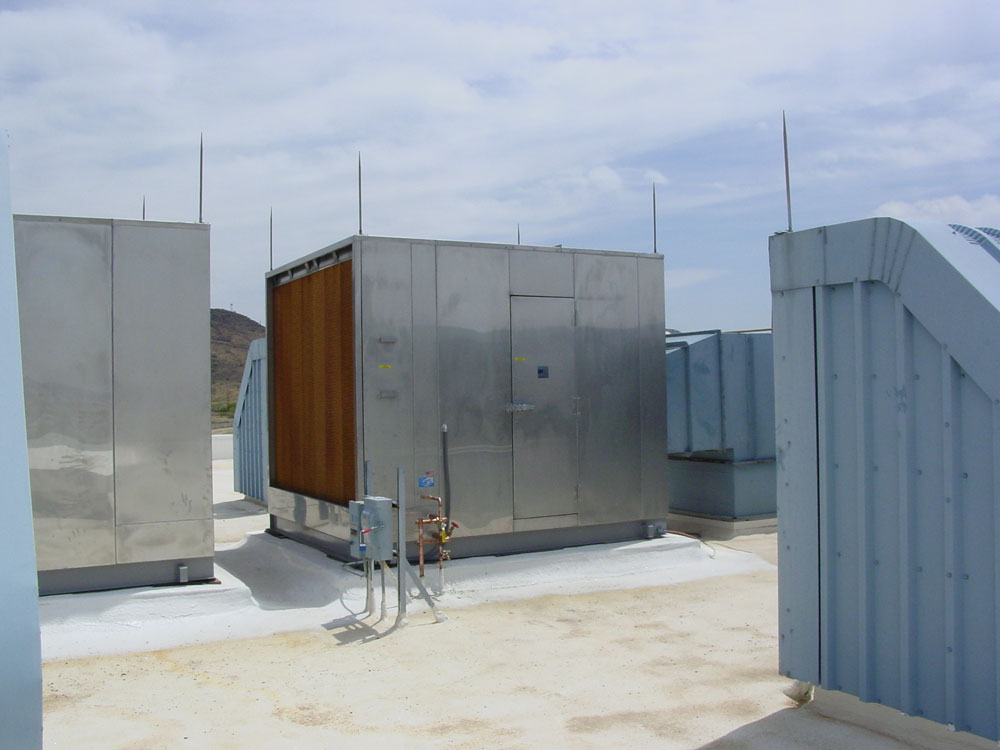
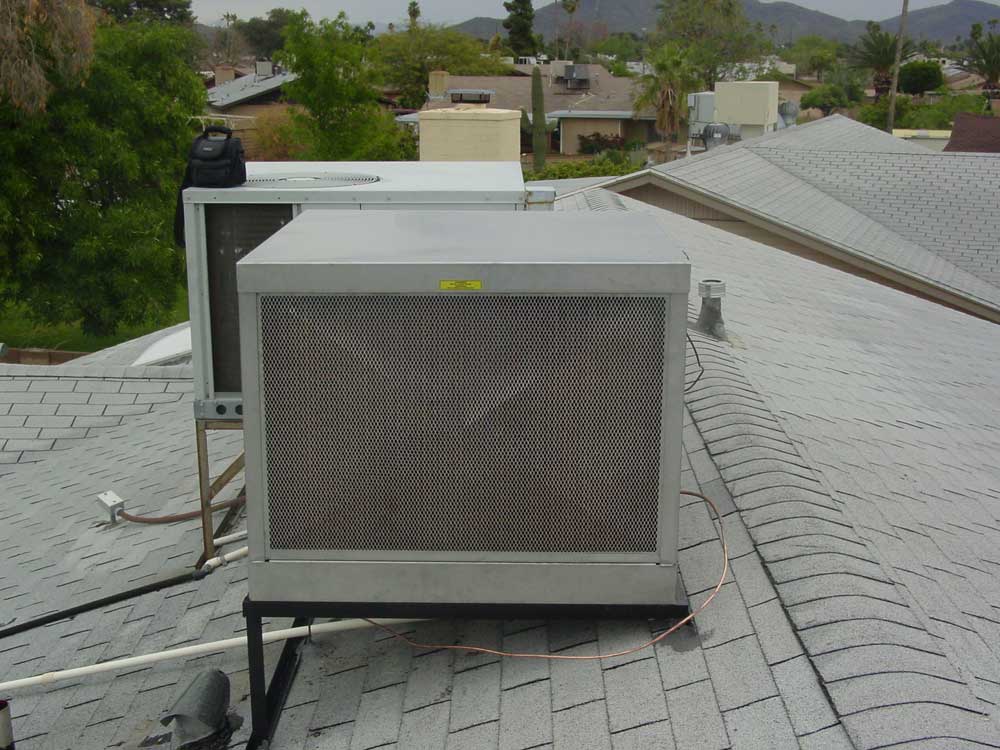
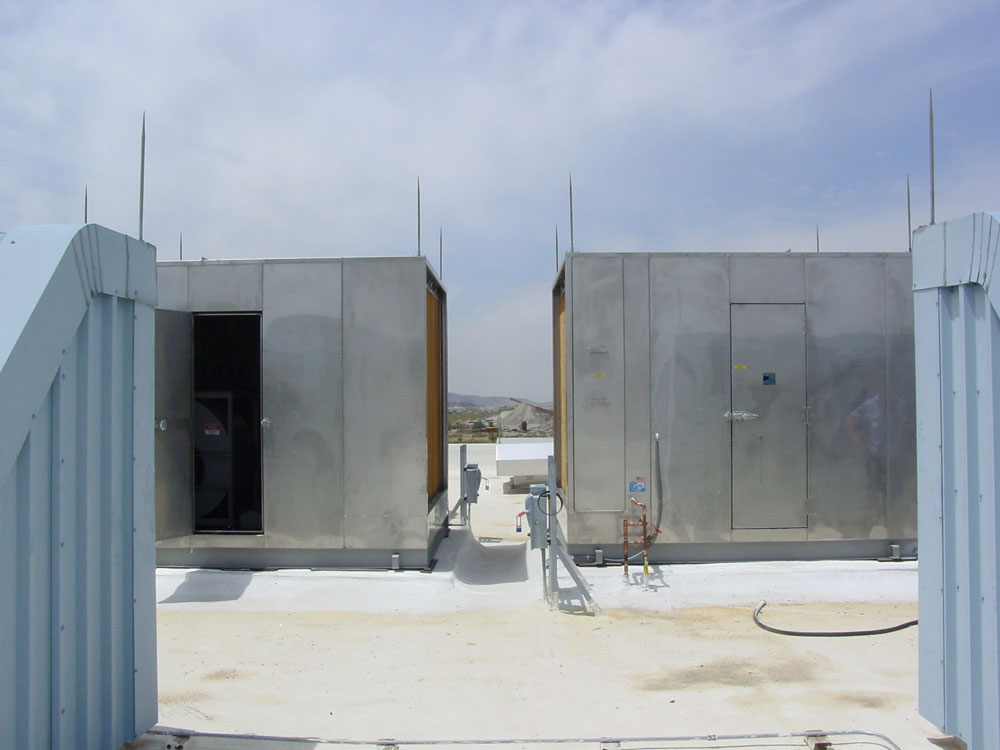
Installed examples and equipment views
Sizing Industrial Evaporative Coolers Correctly
Sizing is one of the most important parts of system selection. A unit that is too small may struggle to support the required air changes or temperature reduction. A unit that is mismatched to static pressure or discharge needs may not perform the way the space demands. Industrial selection should account for facility volume, heat load, building openings, work activity, required air movement, and whether the system will serve a direct open-air application or tie into more controlled airflow planning.
Industrial evaporative coolers should be matched to real operating conditions
PIEC builds systems for both high-volume and higher static pressure applications using forward curve or backward incline blowers. That matters because not every industrial space behaves the same way. A warehouse with a wide-open floor plate and multiple dock doors presents different airflow demands than a plant with process heat, localized hot zones, or more structured air delivery requirements. If you need technical data for planning, our graphs & specs and specs & drawings pages are the best starting point.
Questions that should be answered before buying
- How much square footage and cubic volume need to be served?
- What internal heat load is created by process equipment, lighting, or occupancy?
- How many air changes are needed for the target environment?
- Will the unit need to overcome ducting or higher static pressure?
- Which discharge direction best matches the building layout?
- What maintenance access is available once the system is installed?
Makeup air can be part of the bigger strategy
Some industrial facilities need cooling and ventilation support at the same time. In those cases, buyers may also want to review our makeup air unit options to compare airflow strategies for spaces that require more deliberate air replacement planning.
Technical support is easier when documentation is organized early
Selection tends to move faster when buyers have performance targets, rough building dimensions, operating climate, and layout constraints ready to review. Get in touch with our team to start that conversation.
Construction, Media, and Serviceability in Industrial Environments
Industrial equipment has to do more than look good in a brochure. It has to survive day-to-day operating abuse, hold up under environmental stress, and remain maintainable years after installation. Premier Industries industrial units are built with that reality in mind, including stainless steel construction, rugged framing, high-efficiency 12-inch rigid cooling media, and long-term support for parts and service items.
Why media quality matters in industrial evaporative coolers
The cooling media is central to system performance. Media affects saturation efficiency, pressure drop, temperature reduction, and maintenance intervals. Knowing how often to replace evaporative cooler pads is essential to keeping cooling output consistent and avoiding performance decline between service cycles. As media ages or becomes restricted by mineral buildup, cooling performance can decline. If you need service items later, you can review our replacement media and replacement wet sections options.
Water management and long-term performance
Water quality has a direct impact on component condition and media life. Scale, mineral deposits, and uneven distribution can affect operation over time. Buyers concerned about maintenance planning should also read our article on how water quality affects evaporative cooling performance for a closer look at one of the most overlooked variables in long-term system health.
Feature set buyers often care about most
- Stainless steel construction for durability and corrosion resistance
- Heavy-duty framing designed for industrial operating conditions
- High-efficiency rigid media for consistent evaporative performance
- Flexible discharge options to fit different facility layouts
- Accessory compatibility for more tailored applications
- Replacement part and media availability through an established manufacturer
- Long-term warranty value where applicable
Industrial Evaporative Coolers Compared With Other Cooling Directions
Industrial buyers are rarely looking at just one option. They are often comparing airflow-driven cooling, portable units, broader commercial systems, and more specialized equipment depending on the building and operating conditions. The table below keeps the differences practical.
| Equipment Type | Best Fit | Main Strength |
|---|---|---|
| Industrial evaporative coolers | Warehouses, plants, fabrication, high-volume work areas | High airflow, durable build, large-area cooling |
| Commercial evaporative coolers | Retail, service, public-facing environments | Balanced comfort and practical maintenance |
| Portable swamp cooler | Targeted zones, movable cooling, temporary layouts | Flexibility and localized deployment |
| Evaporative cooler modules | Custom system integration needs | Adaptable configuration for specialized applications |
| Makeup air units | Facilities with structured ventilation and air replacement demands | Supports coordinated airflow and building air balance |
Why Facilities Continue to Work With Premier Industries
Premier Industries has been building evaporative cooling equipment since 1983, and that experience matters when the system is being selected for an actual industrial environment rather than a generic marketing scenario. Buyers often need more than a broad product description. They need honest airflow guidance, configuration options, support for discharge planning, and long-term access to replacement components and media.
If you are still comparing options, you can review our products and accessories, check technical information in the resources section, or browse the shop for related components. Buyers working through a budget can also review our guide on evaporative cooler installation cost for typical equipment and labor ranges. If you already know the facility needs industrial-scale airflow and want help choosing the right unit, speak with our evaporative cooling team or call 602-997-8754.
*Ten year limited warranty against leakage due to rust-through and 1 year limited warranty on components. Contact Premier Industries for complete warranty details.
Frequently Asked Questions About Industrial Evaporative Coolers
How do industrial evaporative coolers work?
Industrial evaporative coolers draw warm outside air through water-saturated media. As the water evaporates, heat is removed from the air stream, and the blower delivers cooler air into the facility.
How do industrial evaporative coolers compare to air conditioning?
Industrial evaporative coolers use significantly less electricity than compressor-based AC systems and deliver fresh outside air instead of recirculating indoor air. They perform best in hot, dry climates where low humidity allows efficient evaporation. Our swamp cooler vs AC guide covers the full cost and performance comparison.
What climate is best for industrial evaporative cooling?
Hot, dry climates usually provide the best results because evaporation is more effective when humidity is lower. Performance expectations should always be matched to actual site conditions.
How do I choose the right CFM for an industrial facility?
CFM depends on building volume, internal heat load, required air changes, discharge layout, and whether the system must handle higher static pressure. Reviewing facility dimensions and operating conditions is the best way to narrow the right model range.
How often does the cooling media need to be replaced?
Media should be inspected at the start of each cooling season and replaced when saturation efficiency drops, mineral buildup becomes visible, or performance declines. Our guide on how often to replace evaporative cooler pads covers typical replacement schedules and the signs to watch for.
What maintenance do industrial evaporative coolers need?
Typical maintenance includes checking water distribution, monitoring water quality, cleaning the basin, inspecting pumps and blowers, and replacing media or wet sections when needed.
Can industrial evaporative coolers be customized for different applications?
Yes. Industrial systems are often selected with specific discharge directions, blower types, accessories, and performance requirements in mind so the unit better matches the way the facility operates.
Get a Quote